Author Archives: Multimedia Mike

My Very Own Search Engine

Back in 1998, I started a web project called the Internet NES Database to catalog information about games for the greatest video game console system of all time, the Nintendo Entertainment System. I reasoned that a web database needed to be searchable but I couldn’t find any literature on exactly how to create a search engine. So I sat down and thought about it and came up with a solution. I eventually refined the idea and later wrote this article about the design decisions I made but never got around to publishing it anywhere. I came across the article on my hard drive recently and figured I may as well publish it in case someone, somewhere might find it interesting.
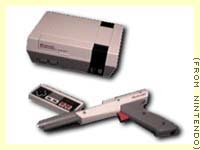

8-bit NES

It’s weird to think that I was building an elaborate search mechanism to index approximately 760 items (the total number of games in the database), though I had hoped to expand the database into something MobyGames-like in due time. Keep in mind that at the outset, while the data was managed in a MySQL database, the data was exposed online through a series of static HTML pages; this was 1998 and it was a little difficult and expensive to get database hosting on the internet. Thus, I could not directly query a database, and I had limited CGI scripting facilities.

Introduction

I present the approach that I took in developing a simple search engine for the Internet NES Database as well as the thinking and reasoning behind the design decisions. It’s not highly sophisticated, but if you don’t know anything about search engine operation, this should give you a starting point.

When I started developing my video game database in early 1998 I knew that it would be much more usable if it featured a search engine. I had no idea how to write a search engine. Web searches on topics such as “search engine theory” turned up thousands of pages claiming to reveal the secrets of getting high ranks in popular search engines. I realized that I was on my own. So I sat down and thought really hard about how to write a search engine.

Continue reading →

Status Report

First off, check out Benjamin Larsson’s new blog: Random thoughts and random numbers. Benjamin is one of the open source community’s resident experts on perceptual audio coding concepts. His blog tracks items toward that end.

When I have time, I have been working on the Hachoir project. I finally contributed a parser for the ultra-fringe Spider-Man BIN format that I discovered a few weeks ago. Hey, it’s a start. As soon as I get the hang of the architecture and Python in general I can picture myself contributing a crazy number of format parsers.

As if I don’t have enough old CD-ROM games to process, I have taken to hunting down entire lots of CD-ROM games on eBay. The strategy is working well as my first lot just arrived. Now I have 50 more games to process for my Multimedia Exploration Journal. I just hope I have the opportunity to process them sometime before a year transpires.

FFmpeg Autobuilds

I have been sitting on this for at least a month. As brainstormed in this post, I have developed a system on a spare, headless, always-on x86 Linux box that automatically updates its FFmpeg SVN copy and compiles it with 6 different gcc versions, essentially the latest in each of the 2.95, 3.2, 3.3, 3.4, 4.0, and 4.1 series. That’s all working quite well. The part that I’m trying to resolve right now is what to do with the results. I would like to aggregate the results into a concise format for easy web reading. Plus, it would be good to have a history of build successes/failures. I think an RSS aggregation would be useful as well. And for bonus points, some halfway intelligent system that figures out which warnings occur in all or most builds. This would reveal good code janitor work for aspiring FFmpeg developers.

This is just the first phase. Of course, I want to add functional tests later, such as the standard regression. I am still trying to get the infrastructure up.

Related post:

Branching Out

Cyril Zorin wanted a good place to document a 3D model format used in a LucasArts computer game. I thought this might be a good time to expand the charter of the MultimediaWiki to include more general game formats, not just the FMV-oriented ones. That is, unless there are other wikis devoted to that same charter. Perhaps I’m not asking the right questions, but a quick Google for “game format wiki” brings up this domain and the XentaxWiki in the first page.


joystick

BTW, Cyril wants to know if anyone has anything to add to the inaugural 3D format page in the MultimediaWiki.