July 17th, 2006 by
Multimedia Mike
I’m taking useless academic exercises to new heights. I wrote a utility called gcfuse that allows you to mount filesystems replicated, one way or another, from Nintendo GameCube DVDs.
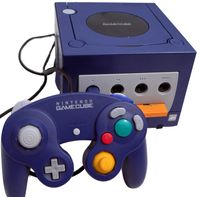
What on earth for? I’ve heard tales of strange and wonderful FMV formats on those petite GameCube DVDs and I just had to know for myself. One game I’m playing right now is Metroid Prime, which has visuals that certainly appear to be pre-rendered multimedia files. Let’s find out:
$ gcfs metroidprime.gcm gcm/
$ ls gcm/
Audio Metroid4.pak NESemu.rel SlideShow.PAK metroid5.pak
AudioGrp.pak Metroid6.pak NESemuD.rel TestAnim.Pak opening.bnr
GGuiSys.pak Metroid7.pak NESemuP.rel Tweaks.Pak
Metroid1.pak Metroid8.pak NoARAM.pak Video
Metroid2.pak MidiData.pak SamGunFx.pak client_pad.bin
Metroid3.pak MiscData.pak SamusGun.pak default.dol
$ ls gcm/Video/
00_first_start.thp 08_GBA_fileselect.thp attract9.thp
01_startloop.thp AfterCredits.thp creditBG.thp
[...]
Right away, a new multimedia format– THP. The GC-Linux project already has documentation about this MJPEG-like format. Samples, of course, are available for your inspection.
Posted in Game Hacking, Nintendo, Open Source Multimedia |
9 Comments »
June 10th, 2006 by
Multimedia Mike
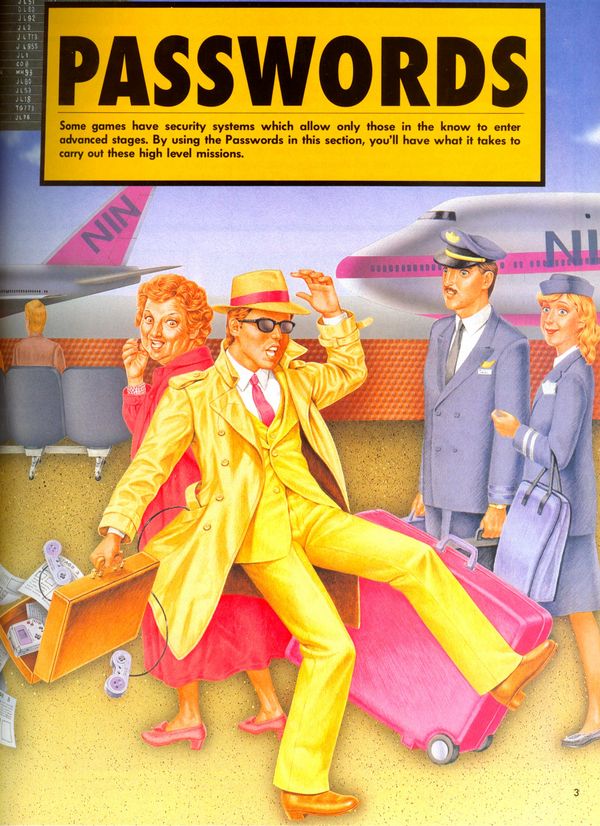
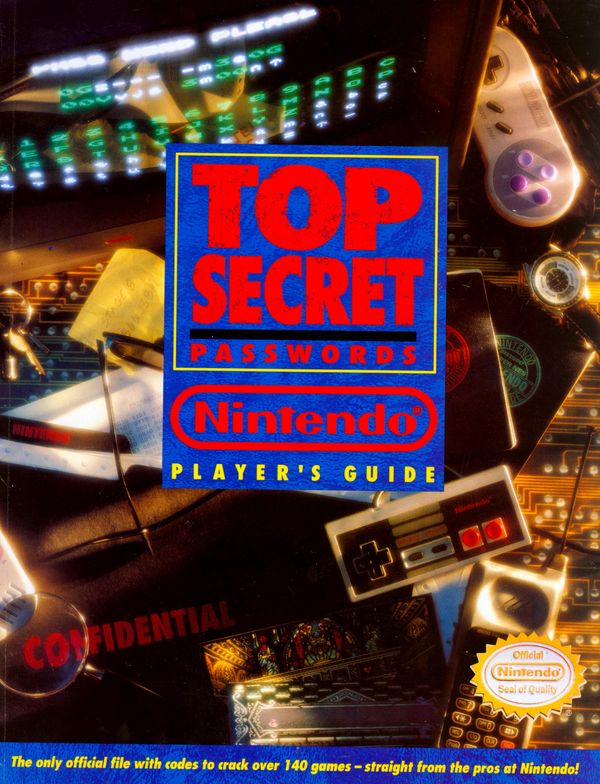
I was perusing my old Nintendo Power issues today, as I am wont to do for no good reason, and I stumbled upon a forgotten bonus that the magazine shipped to its subscribers once upon a time– Top Secret Passwords:

Click for a larger image, and to guess which game is covered by the level 8 password on the sticky note
Now I’m playing with power. They put a tremendous amount of work into that cover. Passports for not only the Principality of NES but also the Republic of SNES. I guess in the early 1990s, nothing said “top secret” quite like a portable phone. Luckily, the book features passwords for Solar Jetman, the present object of my password infatuation. I wonder if the official password validator accepts the secret password comprised of all ‘Q’s, or if that’s handled by a special case.
Not only is Solar Jetman covered in the book but when I opened the book a carefully folded piece of paper slid out. It contained a number of very neatly written passwords, including ones for every world in Solar Jetman! It doesn’t look like my handwriting, plus the paper includes passwords for games that I never would have been caught dead playing. What a mystery. It’s almost like someone meant for me to find these clues and take up the cause of researching these ancient Nintendo password systems.
The password book contains passwords for a number of games where the only information carried in the password is what level the player was on. For a number of such games, I did a quick string check through the respective ROM data for the passwords. It looks like no coders bothered to use straight string comparison techniques for password validation.
One can only guess what sort of international espionage thrillers influenced the book’s artists, but their conceptualization of incognito (and airplane markings) involved a lot of pink:

Click for larger image of Codename: Pink Gamer
Posted in Nintendo, Outlandish Brainstorms |
1 Comment »
June 7th, 2006 by
Multimedia Mike
Notepad time! (This is where I just use this blog as a piece of scratch paper for random investigations.)

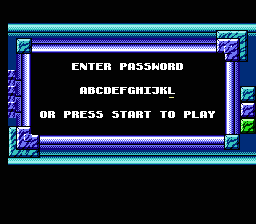
Solar Jetman’s password entry screen
Reverse engineering the password system from an old NES game…
Read the rest of this entry »
Posted in Nintendo, Reverse Engineering |
5 Comments »
June 4th, 2006 by
Multimedia Mike
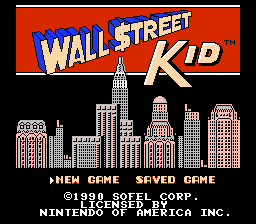
I spent the vast majority of my junior high free time in front of a scratchy television connected to a Nintendo Entertainment System (NES) console. (Try not to act too surprised.) Many of the more involved Nintendo games either had battery-backed RAM on the cartridge PCB for saving games or employed a password system. The game would issue a password at various junctures in the game that you were expected to copy down accurately so that you could resume your game at a later time. Password lengths were commensurate with the complexity of the game and the amount of information required to represent a game’s state. For example, some games obviously had a table of plaintext 4- or 5-character passwords since the only information being saved was which of the game’s 8 levels the player has just passed. On the other end of the spectrum, the most complex password system I ever encountered was for Wall Street Kid, the groundbreaking stock market sim for the NES. It was a variable length password (at least 50 characters was nominal, if memory serves) with just about every letter of the English alphabet, upper and lower case, numbers, and various other symbols. I don’t think I ever successfully copied down a password for that game.

Wall Street Kid
Read the rest of this entry »
Posted in Nintendo, Outlandish Brainstorms, Reverse Engineering |
4 Comments »