Yearly Archives: 2008

ARM Netbook In The Works

Apparently, I won’t have to revise the entire architecture of FATE in order to test FFmpeg on ARM via the Beagle Board. I have been reading some stuff about how ARM will release chips suitable for netbook devices, and how Canonical has signed on to make sure that at least one Linux distribution runs competently on said devices.

I’m excited about this for 2 reasons: I like netbooks (whereas no conventional laptop has ever managed to interest me) and because I retain an innate fascination with alternate (i.e., non-x86) CPU architectures, architectures that are often difficult to work with due to unavailability of hardware and appropriate tools.
Theora Is Now Officially Available

Wow, it seems like only yesterday that I downloaded the newly open sourced On2 VpVision source code package and started reverse engineering an English language description of the VP3 video coding algorithm. Well, actually, that was nearly 7 years ago. VP3 eventually formed the basis of the Xiph Theora video codec. And today Theora is pleased to announce that the codec is finally, well… final. It’s out. No more alpha/beta phases. The codec is ready for primetime use and should be conquering the digital media frontier in short order.

You know, just like Vorbis.

SQLite: The Ultimate Serialization Format?

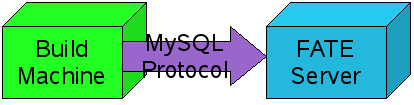
When I started this FATE journey, the easiest approach for getting build results from a build client up to the FATE server was to use the direct MySQL protocol:


Direct MySQL protocol method

This is not an accepted way to do things in this day and age. It is more common to funnel the data via HTTP to the server. I resisted this at first because the direct database protocol method was working fine. But it seems that Python’s MySQLdb module is not portable to as many platforms as I would like to see FATE run on. At the same time, 8 months of FATE experience has shown the direct db protocol to be the weakest link of the whole endeavor. If connection is lost during the database operation, the whole script bails out with a Python exception and must be restarted manually. I realize that reading the MySQLdb-python documentation would probably allow me to deal gracefully with such failures and allow the script to continue. Another, more hackish solution would be to put the script in an infinite loop via the shell so that it would restart after a failure.

Here’s the thing: So what if I could handle the failure gracefully from within the Python script? What do I do then? Continue reading

ARM of FATE

I recently learned of a low-cost, ARM-based board called the Beagle Board. I have been entertaining the idea of purchasing one for testing FFmpeg via FATE. It wouldn’t fit into the current FATE paradigm, though. I envision that another machine would have to cross compile the ARM binary and then tell the Beagle Board to execute the series of tests using the binary.