Trouble with CoCCA Registry

I’ve been rather despondent all week. People who see me daily could readily identify this fact. Unfortunately, the exact reason was difficult to adequately explain. The problems that nerds deal with…

When A Domain Expires
As a few people noticed, the multimedia.cx domain and all of it’s subdomains didn’t work this last week. The problem started on Monday, October 1. Whose fault? Well, fundamentally, I neglected to renew the domain name in time. However, I prefer to place the blame on the .cx domain registrar, CoCCA Registry. You see, they have never developed the technology to email a domain holder with a notice that their domain is about to expire or has already expired.

This domain is the only one I have ever held so I don’t have a lot of experience in this matter. I wondered if I was crazy for thinking it would be normal for a registrar to send an email or 2 with status updates about your domain. I get the impression from speaking with others that this is indeed normal. I have 3 different email addresses listed under my account at the registrar– 2 at multimedia.cx and a backup gmail account. I checked spam folders after this incident. Then I remembered that I have never received any email notifications from them (although password reset emails show up, so that part thankfully works). Also, their support emails are black holes.

So, I guess the moral is: be wary of dealing with CoCCA Registry. However, they seem to be the only way to register domains under a wide variety of uncommon country codes.

By Friday, the domain appeared to have been reinstated, even through the status was officially listed as “renewal-pending” according to the web-based management console. Eventually, as cached DNS results started to time out throughout the day, I started seeing subdomains come back. I excitedly used the ‘dig’ command to count down the seconds until gamemusic.multimedia.cx was accessible on the network I was on (the number after the domain name is the time-to-live or ‘TTL’ value):

$ dig +nocmd gamemusic.multimedia.cx +noall +answer
gamemusic.multimedia.cx. 3      IN      A       174.143.152.251
$ dig +nocmd gamemusic.multimedia.cx +noall +answer
gamemusic.multimedia.cx. 2      IN      A       174.143.152.251
$ dig +nocmd gamemusic.multimedia.cx +noall +answer
gamemusic.multimedia.cx. 1      IN      A       174.143.152.251
$ dig +nocmd gamemusic.multimedia.cx +noall +answer
gamemusic.multimedia.cx. 12962  IN      A       207.45.186.114

Finally, today (Saturday), I received a receipt confirming that the domain has been renewed.

8 Years Old
Incidentally, happy eighth birthday to multimedia.cx. It was September, 2004 when I decided to branch out from a simple ISP-based web presence.

People often ask why I went with the .cx TLD. When I decided I wanted a proper domain name 8 years ago, I found that multimedia.X was already taken for just about every TLD value of X. .cx was a notable exception and was distinctive enough (speaking of .X, though, I see that multimedia.xxx is still up for grabs as of this writing; I imagine that would come with a whole other set of problems).

It’s funny that tech nerds often rail against outsourcing too much — email, storage, computing power, web hosting — all to some type of cloud provider under the premise that it could easily be taken away. But this episode teaches me that even having your own domain name is no guarantee of a solid online presence.

Meanwhile, I have taken proactive steps to avert this same situation from arising again:



Barring a lack of automated emails from the registrar, I hope a Google Calendar reminder set up a month ahead of expiration will do the trick.

Death of A Micro Center

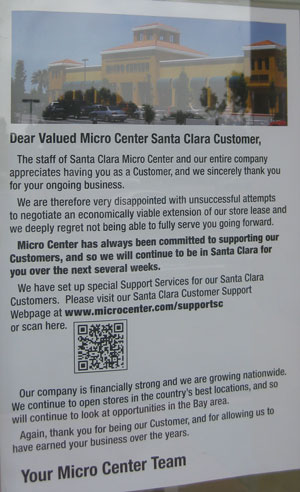
The Micro Center computer store located in Santa Clara, CA, USA closed recently:


I liked Micro Center. I have liked Micro Center ever since I first visited their Denver, CO location 10 years ago. I would sometimes drive an hour in each direction just to visit that shop. I was excited to see that they had a location in the Bay Area when I moved here a few years ago (despite the preponderance of Fry’s stores).

Now this location is gone. I wonder how much of the “we couldn’t come to favorable terms on a lease” was true (vs. an excuse to close a retail store at a time when more business is moving online, particularly in the heart of Silicon Valley). But that’s not what I wanted to discuss. I came here to discuss…

The Micro Center Window Logos

The craziest part about shopping the Santa Clara Micro Center location was the logos they displayed on the window outside. Every time I saw it, it made me sentimental for a time when some of these logos were current, or when some of these companies were still in business. Some of the logos on their front window were for companies I’ve never heard of. It reminds me of the nearby 7-11 convenience stores when I was growing up– their walls were decorated with people sporting embarrassingly 1970s styles long after the 1970s had transpired.

I thought I would record what those front window logos were and try to pinpoint when the store launched exactly (assuming the logos have been their since the initial opening and never changed).


Click for larger image

Here we have Lotus, Hewlett Packard/HP, Corel, Fuji, Power Macintosh, NEC, and Fujitsu. Lotus was purchased by IBM in 1995 and still seems to be maintained as a separate brand. The Power Macintosh was introduced as a brand in 1994. Corel’s logo has seen a few mutations over the years but I don’t know when this one fell out of favor.

Fuji (vs. Fujitsu) appears to refer to Fujifilm, though this logo is also obsolete.


Click for larger image

Hayes– I specifically remember reading the Slashdot post accouncing that Hayes is dead (followed by many comments reminiscing about the Hayes command set). Here is the post, from early 1999.

From Googling, it doesn’t appear IBM still has a presence in the consumer computing space (though they do have something pertaining to software for consumer products). Then there’s the good old rainbow Apple logo, something that went away in 1997. I suspect 1997 was also the last hurrah of the name ‘Macintosh’ (though I remember mistakenly referring to Apple computer products as Macintoshes well into the mid-2000s and inadvertently angering some Apple enthusiasts).


Click for larger image

As for the next segment, obviously, both Sony and Toshiba are still very much alive. Iomega was acquired by EMC in 2008 but is still maintained as a separate brand. USRobotics is still around and making — what else? — 56K modems (and their current logo is slightly different than the one seen here).

Targus seems to be a case maker (“Leading Provider of Cases, Bags and Accessories for Laptops and Tablets”). I wonder if that’s just their current business or if they had more areas long ago? It seems strange that they would get brand billing like this.

Finally, searching for information about Practical Peripherals only produces sites about how they’re long dead (like this history lesson). It’s unclear when they died.

The interior of this store was also decorated with more technology company logos near the ceiling (I didn’t really register that fact until I had visited many times). Regrettably, I now won’t be able to see how up to date those logos were.

Based on the data points above, it’s safe to conclude that the store opened between 1995 or 1996 (again, assuming the logos were placed at opening and never changed).

Epilogue

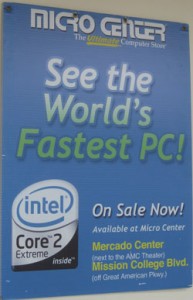
Here’s one more curious item still visible from the outside:


“See the world’s fastest PC!” Featuring an Intel Core 2 Extreme? That CPU dates back to 2007 and was succeeded by Nehalem in late 2008. So even that sign, which is presumably easier and cleaner to replace than the window logos, was absurdly out of date.

Chiptune Database and API

So I set out to create a website that allows people to easily listen to video game music directly through their web browser. I succeeded in that goal. However, I must admit that the project has limited appeal since the web player is delivered via Chrome’s Native Client technology, somewhat limiting its audience. I’m not certain if anyone really expects NaCl to take off in any serious way, but I still have a few other projects in mind.

I recently realized that, as a side effect of this project, I accidentally created something of significant value to fans of old video games and associated music– a searchable database of chiptune music and metadata. To my knowledge, no one else has endeavored to create such a thing. I figured that I might as well make the database easily accessible with an API and see where it leads.

To that end, I created 2 API entry points. First, there is the search API located at http://gamemusic.multimedia.cx/api/search/. This can be exercised by ending the URL with a URL-encoded search string, e.g.: http://gamemusic.multimedia.cx/api/search/super+mario. This returns JSON data containing an array of results in decreasing order of relevance. Each result has a game title, database ID, media URL, system type, and an SHA-1 hash. This is the same API that the site’s own search page uses.

The database ID can be plugged into http://gamemusic.multimedia.cx/api/metadata/ to retrieve the song’s metadata in JSON format. E.g., the ID for Super Mario Bros. 3 on the NES is 161: http://gamemusic.multimedia.cx/api/metadata/161.

I recently read an article about sins against true RESTful API principles which led me to believe I’m almost certainly doing this web API stuff wrong. I don’t think it’s a huge deal, though, since I don’t think anyone actually listens to chiptunes any more. But if there are offline chiptune music players that are still in service and actively maintained, perhaps the authors would like to implement this API. It would require some type of HTTP networking library, a JSON parser, the embedded XZ decoder, and some new code to parse through my .gamemusic and .psfarchive formats.

This database could be a significant value-add to chiptune playback software, and could help people experience classic game music much more easily.

Diamond Rio Artifacts

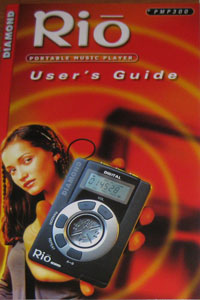
Remember the Diamond Rio PMP300? It’s credited with being the very first portable MP3 player, released all the way back in 1998 (I say ‘credited’ because I visited an audio museum once which exhibited a Toshiba MP3 player from 1997). I recently rescued a pristine set of Rio artifacts from a recycle pile.


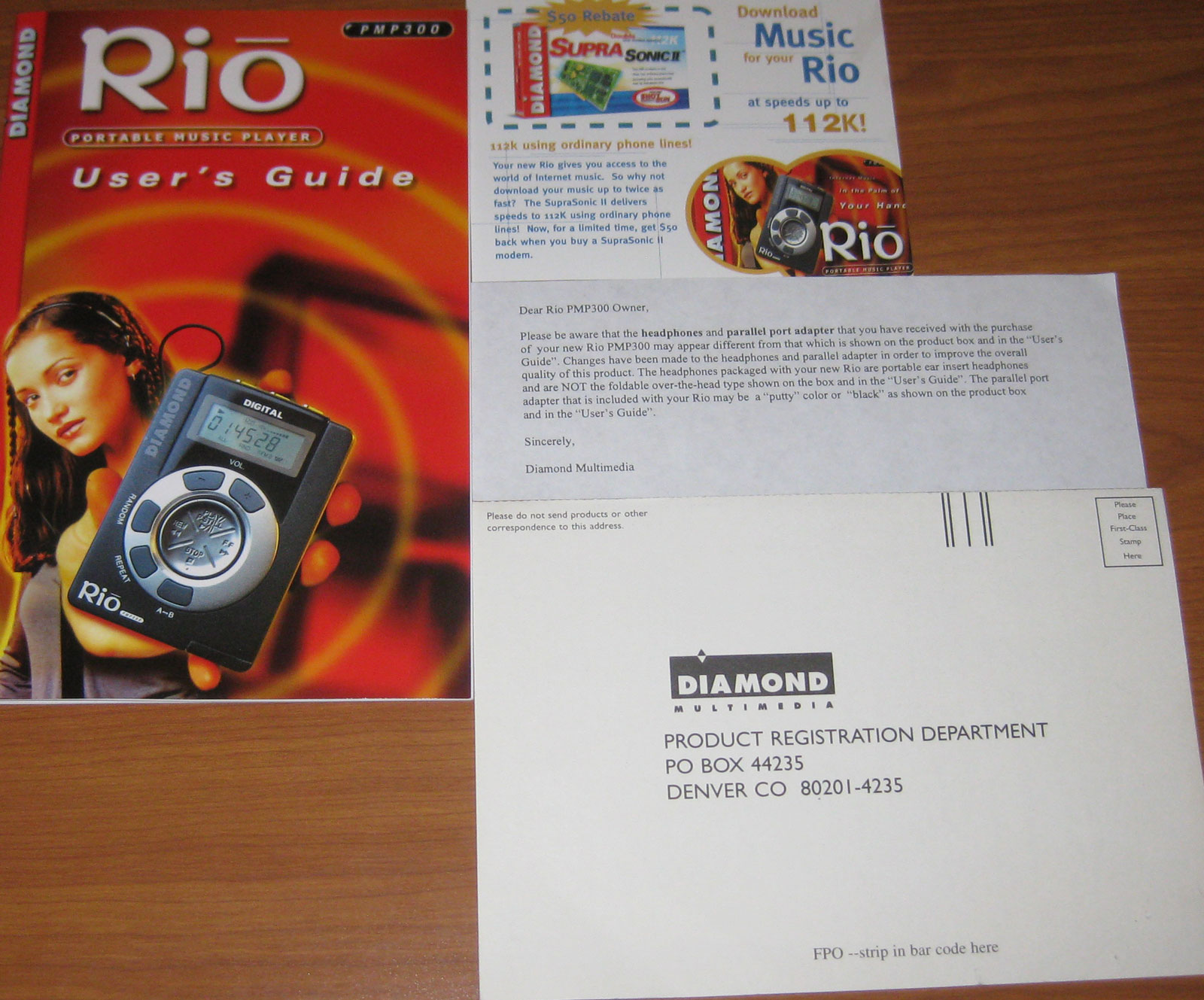
I wondered if I should scan the manual for posterity. However, a Google search indicates that a proper PDF (loaded with pleas to not illegally copy music) isn’t very difficult to come by. Here are the other items that came with the unit:


Click for larger image

Ah, more memories (of dialup internet): A tie-in with another Diamond product, this time a modem which claims to enable the user to download songs at up to 112 kilobits per second. I wonder if that was really possible. I remember that 56k modems were a stretch and 33.6k was the best that most users could hope for.

There is also a separate piece of paper that advises the buyer that the parallel port adapter might look a bit different than what is seen in the printed copy. Imagine the age of downloading to your MP3 player via parallel port while pulling down new songs via dialup internet.

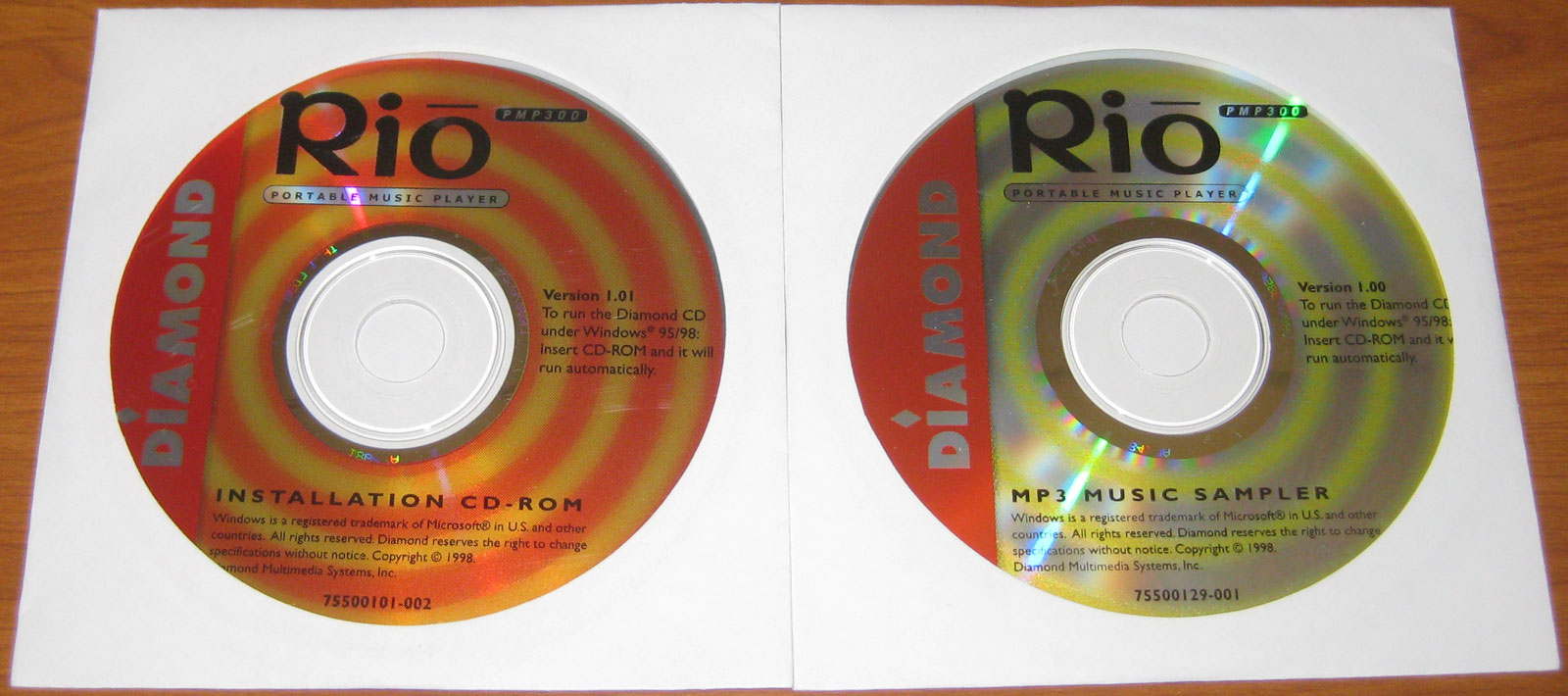
The artifacts also included not one, but two CD-ROMs:


Click for larger image

One is a driver and software disc, so no big surprise there. The other has a selection of MP3 files for your shiny new MP3 player. I’m wondering if these should be proactively preserved. I was going to process the files’ metadata and publish it here, for the benefit of search engines. However, while metadata is present, the files don’t conform to any metadata format that FFmpeg/Libav recognize. The files mention Brava Software Inc. in their metadata sections. Still, individual filenames at the end of this post.

Leftovers:
A few other miscellaneous multimedia acquisitions:


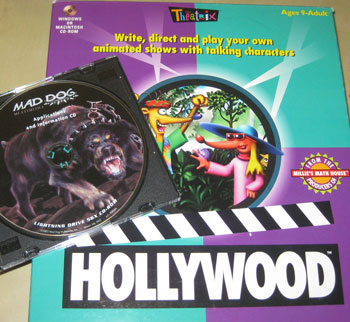
I still want to study all of these old multimedia creation programs in depth some day. Theatrix Hollywood is a creative writing game, Wikipedia alleges (I’m a bit rigid with my exact definition of what constitutes a game). Here is an example movie output from this software. Meanwhile, the Mad Dog Multimedia CD-ROM apparently came packaged with a 56X CD-ROM drive (roughly the pinnacle of CD-ROM speeds). I found it has some version of Sonic Foundry’s ACID software, thus making good on the “applications” claim on the CD-ROM copy.

Diamond Rio MP3 Sampler
These are the names of the MP3 files found on the Diamond Rio MP3 sampler for the benefit of search engines.

Continue reading