Save for the yeoman’s work that our little community does on the MultimediaWiki, it’s generally quite difficult to come by solid technical data on specific multimedia codecs. That even holds true for the “open” MPEG codecs which are wrapped up in NDAs and licensing fees. So I was stunned to find a thick, colorful, well-illustrated book called “MPEG-4 Jump Start” at the local public library.
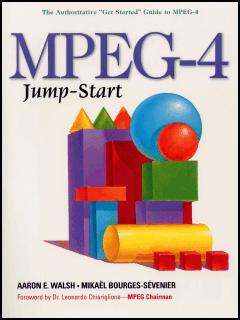
I thought this looked highly promising because, while I know a lot of the general concepts surrounding image compression, I have never gotten too deep into MPEG-4 video compression for the simple reason that everyone else works on it. Thus, I don’t feel a need to.
Unfortunately, this book is not quite what I expected. I once asked the guru in passing whether or not FFmpeg supported the entire MPEG-4 spec. His terse response: “Very funny.” It turns out that MPEG-4 encompasses a huge number of features relating to sprite movement and 3D stuff that no one ever uses in practice these days. And that, my friends, is what this book was largely focused on. It may help to explain why Amazon presently lists used copies of this giant tome starting at $2.81.
There is, however, a followup volume entitled “More MPEG-4 Jump Start” (why do I get the feeling that MPEG probably has a separate committee dedicated to developing the names of these books?) that claims it will divulge more information about audio and video coding in the MPEG-4 scheme.
You can read an amusing passage about the unused body of MPEG-4 features under the “Enter the MPEG-4 behemoth” section at Deconstructing H.264/AVC.